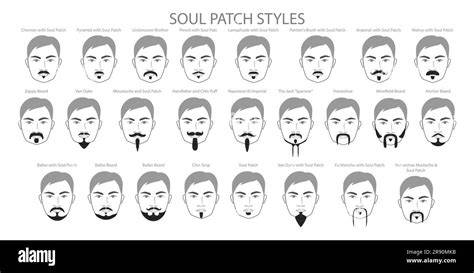
A soul patch egy hajfolt a felső ajak alatti gödröcske és az áll között. A soul patch's story is, at heart, one of a great cultural shift in the 20th century. It's a tale that shows how facial hair can change from universal symbol of cool to ... something else, in just a few decades.
It's a patch of hair below the lip - and its origins only make its story more tragic: It's easiest to peg the soul patch to Dizzy Gillespie: Though the hairstyle was common to many in jazz circles, he was the most famous soul patch wearer, and the term "Dizzy Gillespie beard" was the most common phrase before the term "soul patch" became ubiquitous. It took a while for the soul patch to get its name.
Eredet és elnevezések
Though Tom Waits wore one and Frank Zappa's family copyrighted his mustache/soul patch combo, in the early years a number of soul patch sobriquets grew from the stubble, including "jazz dab," "jazz dot," and others. One of the earliest print appearances of "soul patch" popped up in a 1979 issue of Rolling Stone that followed the Blues Brothers' adventures in facial hair.
They may have helped solidify the term. However, it seems reasonable to assume that the Blues Brothers, Tom Waits, and others helped the soul patch shed its "jazz" roots and become a universal alternative symbol of cool.
Terjedés a popkultúrában
From there, the spot just beneath the lip became prime real estate for the most expressive of hair designs. That may have helped it become iconic in the grunge era of the early '90s, when numerous Pacific Northwesterners adopted it as their facial hair of choice.
It had become a universal signifier of soulfulness, and it showed up on hipsters in Boston in 1995 and was in copy editing dictionaries by 1998. The patch may have peaked in 1999, when celebrity wearers like Apolo Ohno, Mike Piazza, and Garth Brooks's alter ego Chris Gaines let their patches flourish.
Villainpedia: Javítások
Stílus és jelentés a változó trendekben
We can only guess what happened next (since, sadly, there has not been a MacArthur Genius Grant recipient for a soul patch scholarship ... yet). Can we glean any greater meaning from the search for the soul patch?
What hipsters love in one decade can become, startlingly quickly, uncool in another. Who knows - maybe there's a soul patch revival just around the corner.
Hogyan viseljük a soul patch-et
It's a patch of hair below the lip - and its origins only make its story more tragic: From there, the spot just beneath the lip became prime real estate for the most expressive of hair designs. It's easiest to peg the soul patch to Dizzy Gillespie: Though the hairstyle was common to many in jazz circles, he was the most famous soul patch wearer, and the term "Dizzy Gillespie beard" was the most common phrase before the term "soul patch" became ubiquitous.
Though Tom Waits wore one and Frank Zappa's family copyrighted his mustache/soul patch combo, in the early years a number of soul patch sobriquets grew from the stubble, including "jazz dab," "jazz dot," and others. They may have helped solidify the term.
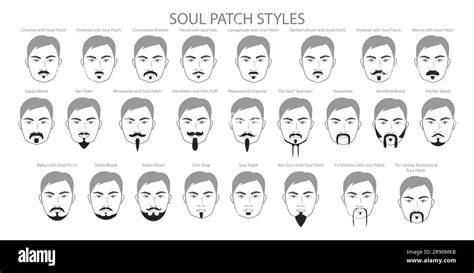
Formák és variációk
It had become a universal signifier of soulfulness, and it showed up on hipsters in Boston in 1995 and was in copy editing dictionaries by 1998. The patch may have peaked in 1999, when celebrity wearers like Apolo Ohno, Mike Piazza, and Garth Brooks's alter ego Chris Gaines let their patches flourish.
From there, the spot just beneath the lip became prime real estate for the most expressive of hair designs. That may have helped it become iconic in the grunge era of the early '90s, when numerous Pacific Northwesterners adopted it as their facial hair of choice.
Arcformához igazítás
It's a tale that shows how facial hair can change from universal symbol of cool to ... something else, in just a few decades. What hipsters love in one decade can become, startlingly quickly, uncool in another.
Idővonal és mérföldkövek
| Év | Esemény |
|---|---|
| 1979 | One of the earliest print appearances of "soul patch" popped up in a 1979 issue of Rolling Stone that followed the Blues Brothers' adventures in facial hair. |
| 1990-es évek eleje | That may have helped it become iconic in the grunge era of the early '90s, when numerous Pacific Northwesterners adopted it as their facial hair of choice. |
| 1995 | It had become a universal signifier of soulfulness, and it showed up on hipsters in Boston in 1995 and was in copy editing dictionaries by 1998. |
| 1998 | It had become a universal signifier of soulfulness, and it showed up on hipsters in Boston in 1995 and was in copy editing dictionaries by 1998. |
| 1999 | The patch may have peaked in 1999, when celebrity wearers like Apolo Ohno, Mike Piazza, and Garth Brooks's alter ego Chris Gaines let their patches flourish. |
Kik viselték és miért számít
It's easiest to peg the soul patch to Dizzy Gillespie: Though the hairstyle was common to many in jazz circles, he was the most famous soul patch wearer, and the term "Dizzy Gillespie beard" was the most common phrase before the term "soul patch" became ubiquitous. Though Tom Waits wore one and Frank Zappa's family copyrighted his mustache/soul patch combo, in the early years a number of soul patch sobriquets grew from the stubble, including "jazz dab," "jazz dot," and others.
They may have helped solidify the term. However, it seems reasonable to assume that the Blues Brothers, Tom Waits, and others helped the soul patch shed its "jazz" roots and become a universal alternative symbol of cool.
Lehetséges jövő
We can only guess what happened next (since, sadly, there has not been a MacArthur Genius Grant recipient for a soul patch scholarship ... yet). Who knows - maybe there's a soul patch revival just around the corner.