Good old water, aka H2O. The most common skincare ingredient of all. One more thing: the water used in cosmetics is purified and deionized (it means that almost all of the mineral ions inside it is removed).
Read all the geeky details about Glycerin here >> An extremely common multitasker ingredient that gives your skin a nice soft feel (emollient) and gives body to creams and lotions. It also helps to stabilize oil-water mixes (emulsions), though it does not function as an emulsifier in itself. It’s a so-called fatty alcohol, a mix of cetyl and stearyl alcohol, other two emollient fatty alcohols.
Though chemically speaking, it is alcohol (as in, it has an -OH group in its molecule), its properties are totally different from the properties of low molecular weight or drying alcohols such as denat. alcohol. A clear, colorless emollient ester (oily liquid from isopropyl alcohol + palmitic acid) that makes the skin nice and smooth. We don't have description for this ingredient yet.
An easy-to-formulate, commonly used, nice to have ingredient that’s also called pro-vitamin B5. Its main job in skincare products is to moisturise the skin. It’s a humectant meaning that it can help the skin to attract water and then hold onto it. Another great thing about panthenol is that it has anti-inflammatory and skin protecting abilities. A study shows that it can reduce the irritation caused by less-nice other ingredients (e.g. If that wasn’t enough panthenol is also useful in nail and hair care products. As for the hair the hydration effect is also true there.
Castor oil is sourced from the castor bean plant native to tropical areas in Eastern Africa and the Mediterranean Basin. It is an age-old ingredient (it’s over 4,000 years old!) with many uses including as a shoe polish, food additive and motor lubricant. So what is so special about it? The answer is its main fatty acid, called ricinoleic acid (85-95%). Unlike other fatty acids, ricinoleic acid has an extra water-loving part (aka -OH group) on its fatty chain that gives Castor Oil several unique properties. First, it is thicker than other oils, then its solubility is different (e.g. dissolves in alcohol but not in mineral oil), and it allows all kinds of chemical modifications other oils do not, hence the lots of Castor oil-derived ingredients. It is also more glossy than other oils, in fact, it creates the highest gloss of all natural oils when applied to the skin. Other than that, it is a very effective emollient and occlusive that reduces skin moisture loss so it is quite common in smaller amounts in moisturizers. While it is very unlikely (and this is true for pretty much every ingredient), cases of reactions to castor oil have been reported, so if your skin is sensitive, it never hurts to patch test.
When it comes to cosmetic oils and hype, argan oil is for sure leading the way. Dubbed as the "liquid gold of Morocco", we have to admit we have some trouble determining why this oil enjoys such a special miracle status. So, argan oil comes from the kernel of the argan fruit that comes from the argan tree that grows only in Morocco. The tree is slow growing and getting the oil is a hard job. The traditional process is that the ripe argan fruits fall from the tree, then goats eat them up and poop out the seeds. The seeds are collected and smashed with a stone to get the kernels inside. This part is the hard one as the seeds have extremely hard shells. Once the kernels are obtained, the oil is pressed out from them (the kernels contain about 50% oil). As for skincare, argan oil is loaded with lots of skin goodies (but so are many other plant oils): it contains 80% nourishing and moisturizing unsaturated fatty acids, mainly oleic (38-50%), linoleic (28-38%) and palmitic (10-18%). Thanks to all the above goodness in argan oil, it can greatly nourish and moisturize the skin and hair. It's also claimed to be able to neutralize collagen-damaging free radicals, help reduce scars, and revitalize and improve skin elasticity.
If you have an interest in elephants and Africa, you have probably heard of elephants getting drunk from the fruit of the Marula tree. Though this seems to be only a legend, what is true is that the Marula fruit is really nice (and elephants do love to eat it) and there is a stone in it with several oil-rich kernels inside. So the Marula oil - similar to many other plant oils - is a really nice nourishing and moisturizing oil that can improve skin hydration and smoothness and it can even reduce skin redness. It's traditionally used in South Africa to massage babies with and as a body lotion for face, feet, and hands. As for its composition, it's loaded with skin goodies: it's very rich in fatty acids, including oleic (73%), palmitic (15%), and linoleic (9%) acids.
Exactly what it sounds: nice smelling stuff put into cosmetic products so that the end product also smells nice. If you are someone who likes to know what you put on your face then fragrance is not your best friend - there's no way to know what’s really in it. Also, if your skin is sensitive, fragrance is again not your best friend. It’s the number one cause of contact allergy to cosmetics. We don't have description for this ingredient yet.
A helper ingredient that helps to make the products stay nice longer, aka preservative. It’s pH dependent and works best at acidic pH levels (3-5). It's one of those things that help your cosmetics not to go wrong too soon, aka a preservative. It’s not a strong one and doesn’t really work against bacteria, but more against mold and yeast. To do that it has to break down to its active form, sorbic acid. For that to happen, there has to be water in the product and the right pH value (pH 3-4). But even if everything is right, it’s not enough on its own. If you see potassium sorbate you should see some other preservative next to it too. BTW, it’s also a food preservative and even has an E number, E202.
Citric acid comes from citrus fruits and is an AHA. But according to a comparative study done in 1995, citric acid has less skin improving magic properties than glycolic or lactic acid. Normal (well kind of - it's purified and deionized) water. Usually the main solvent in cosmetic products. A real oldie but a goodie. Pro-Vitamin B5 is a goodie that moisturises the skin, has anti-inflammatory, skin protecting and wound healing properties. Castor oil is sourced from the castor bean plant native to tropical areas in Eastern Africa and the Mediterranean Basin. Argan oil - the "liquid gold of Morocco" that contains 80% unsaturated fatty acids (oleic and linoleic mainly), and antioxidant vitamin E and phenols. Marula Oil - a really nice nourishing and moisturizing oil that can improve skin hydration and smoothness and it can even reduce skin redness. The generic term for nice smelling stuff put into cosmetic products so that the end product also smells nice. A preservative that works mainly against fungi. A not so strong preservative that doesn’t really work against bacteria, but more against mold and yeast. An AHA that comes from citrus fruits.
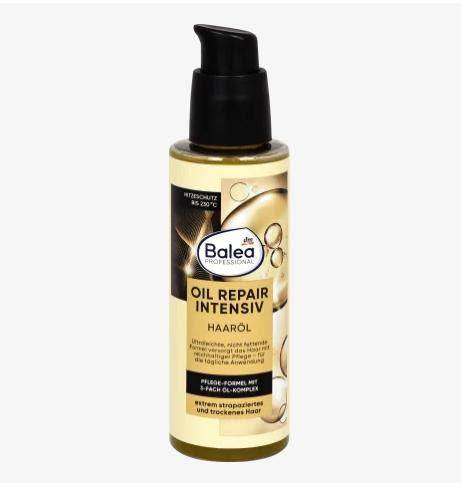
🛒 Hol kapható? A Balea Professional Oil Repair intenzív hajápoló olaj speciálisan az extrém igénybevételnek kitett és száraz haj ápolására készült. A termék háromszoros olaj komplexszel lett formulázva, amely argán-, marula- és babasszu olajat tartalmaz, így mélyen táplálja és ápolja a hajszálakat. Az ultrakönnyű, nem zsírosító formula azonnali megoldást kínál a nehezen kezelhető, erősen sérült haj számára, miközben javítja a haj egészséges megjelenését és puhaságát egészen a hajvégekig. Minden összetevő egy vagy több funkcióval rendelkezik az alapján, hogy mi célt szolgál. Egy adott anyag funkcióinak a megtekintéséhez klikkelj a nevére. A termék összetevői a funkcióik szerint csoportosítva. Ennek a listának a segítségével pillanatok alatt pontos képet kaphatsz a termék tudásáról és a fontos hatóanyagairól.
Hidratáló: A haj és fejbőr hidratálását, nedvességmegtartó képességét segítő összetevők és a nedvességet vonzó vagy megtartó anyagok.
Bőrpuhító: A fejbőrt és a hajat puhító hatású anyagok.
A dupe termékek funkció segít, hogy olyan termékeket találj, amik hatóanyag összetételben hasonlítanak az általad keresett termékre. Ennek a funkciónak nem az a célja, hogy csak a 100%-ban egyező termékeket listázza, hanem, hogy megtaláljuk azokat a termékeket is, amik hasonlóak, de több vagy kevesebb összetevő található meg bennük. A termékek közötti százalékos egyezéseket a TBO algoritmusa számolja ki. A számítás során egy bonyolult metódus szerint figyelembe vesszük az egyező és eltérő hatóanyagokat, azok sorrendjét és más fontos paramétereket. Jelenleg 65%-os egyezéstől mutatjuk a hasonló termékeket.
Mire jók a szilikonok a hajápolásban? A szilikonokat mindenféle hajápolási termékben használják a gyártók. Gyakran tartalmazzák samponok, hajbalzsamok és más hajápolók, hajformázók, hogy simaságot, göndörödés elleni védelmet és fényt biztosítsanak. Könnyű bevonatot képeznek a hajszálak körül, ami segít csökkenteni a haj nedvességvesztését, megvédi a hajat a hőkárosodástól és megelőzi a gubancolódást. Bár a haj selymesebbnek érződik tőlük, a nem vízben oldódó szilikonok (pl. a dimethicone) hosszú távon lerakódásokat hozhatnak létre, aminek az eltávolításához tisztító (clarifying) samponra van szükség.
Összefoglaló az összetevők közül kiemelve
- H2O (víz) - fő oldószer a kozmetikumokban, purifikált és deionizált.
- Glicerin - emolliens és emulziok stabilizálásában közreműködő vegyület.
- Panthenol (pro-vitamin B5) - hidratálás, gyulladáscsökkentés és bőr védő hatások.
- Kenderszappan és zsírsavak - ricinoleic sav a repceolaj-szerű növényi olajok különleges tulajdonságaival.
- Castor olaj - sűrű olaj, magas ricinoleic savtartalom, kiváló emolliens és occlusív hatás.
- Argan olaj - 80% telítetlen zsírsavak, E-vitamin és fenolok; bőr és haj tápláló.
- Marula olaj - erősen tápláló olaj, javítja a hidratáltságot és a bőr pirosságának csökkentését.
- Fragrance - illatkomponens; érzékeny bőrre kerülendő.
- Sorbic sav (E202) - gombaellenes tartósítószer, pH-érzékeny.
- Citromsav - AHA, bőrszépítő képességek korlátozottak összevetve glycolic vagy lactic savakkal.
- Szilikonok - bevonatot adnak, védik a nedvességveszteséget, ám passzív lerakódást okozhatnak hosszú távon.
Miért KELL hajolajat használnod?
Hogyan használjuk a Balea intenzív hajápoló olajat?
- Vigye fel tiszta, nedves vagy száraz hajra, különösen a hajvégekre.
- Masszírozza be gyengéden, hogy a három olaj (argán-, marula- és babasszu) mélyen beszívódjon.
- Kerülje a gyökerekhez közeli területeket, hogy elkerülje a zsíros hatást.
- Használhatja hajmasszázsra és a hajápoló rutin részeként.
- Ha érzékeny a bőre, patch-tesztelje először; kerülje a túlzott illatot tartalmazó összetevőket.
tags: #balea #intenziv #olaj #regeneralo #hajpakolas